Part II — Openings
What the Well Called Back
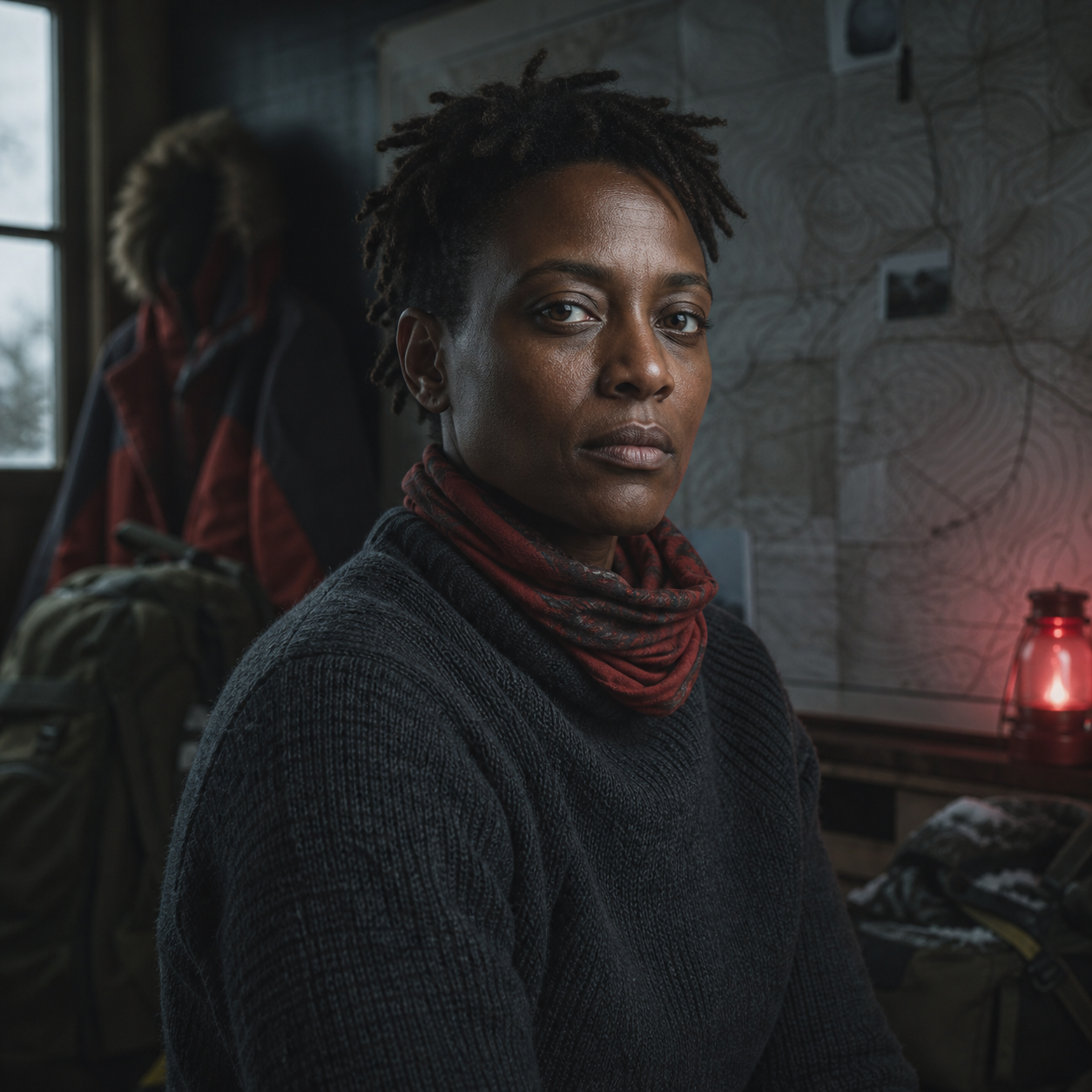
Liora Crane
Liora is a search cartographer who marks trails found only after people disappear. They keep snow samples in labeled jars and insist one of them has never melted. Their fiction treats landscape as a witness with its own evidence, memory, and occasionally malicious sense of direction.
Open full author profileThis is an openly fictional, AI-assisted BREAK PAST house-author persona. The portrait is AI-generated, the biography is invented, and legal authorship and rights are tracked privately.
The well began naming children on the fifty-third day without rain.
By then, the corn on our farm had curled into brown fists. The cattle stood rib-deep in the empty stock pond and nosed cracked mud where water had been. Every afternoon the sky darkened at the horizon, promising a storm, and every evening the clouds passed north without giving us a drop.
My husband, Daniel, said we could survive one bad year.
The bank said otherwise.
Daniel had sold his father's tools, my wedding jewelry, and the north acreage in that order. We stopped opening mail at the table because Wren had begun measuring bad news by the silence after we read it.
The farm was not just land. My mother was born in the east bedroom. Grandma Cora buried three husbands from the front parlor. Every doorframe carried four generations of children's heights.
Leaving felt like breaking a promise to the dead.
The well understood promises.
The old well sat behind the equipment barn under a circle of poured concrete. My grandfather had sealed it in 1961, before my mother was born. Nobody living knew why. It was deeper than the county records showed and wider at the bottom than at the top, which Daniel said was impossible and my grandmother said was the reason it had been closed.
On the fifty-third day, Daniel took a sledgehammer to the cap.
"No," Grandma Cora said.
She stood on the back porch in her nightgown, though it was nearly noon. At eighty-six she weighed less than a feed sack, but the word crossed the yard like a rifle shot.
Daniel lowered the hammer.
"Cora, the new bore estimate is twenty-four thousand dollars. This water is already here."
"That isn't water."
Our daughter Wren looked up from the audio recorder in her lap.
At twelve, she had developed a habit of recording things that were disappearing: frogs after the ponds dried, wind moving through the last green stand of soybeans, cicadas whose rhythm she insisted had changed with the heat. She said she was making a museum of sounds for people in the future.
I told her people in the future would still have cicadas.
She asked how I knew.
That was Wren.
"What is it, Grandma?" she said.
Cora looked at her and seemed to forget the rest of us.
"A mouth."
Daniel laughed once, without humor.
"It's a hole in the ground."
"Those are the same thing if you feed them long enough."
He broke the concrete before dinner.
The cap was eight inches thick, threaded with rusted rebar. When the first wedge fell inward, we waited for the sound of it striking water.
We heard nothing.
Daniel widened the opening. Cold air breathed out against our sunburned faces.
The smell was not mud or stone. It was the mineral smell of rain on a road, so vivid that my mouth filled with saliva.
Wren knelt beside the opening.
"Can I record it?"
Grandma Cora seized the back of her shirt and pulled her away.
"Nothing with ears goes near that well."
"A microphone doesn't have ears," Wren said.
"Then why does it listen?"
We should have stopped.
But the farm had belonged to my family for four generations, and by August it belonged more to First County Bank than to us. Desperation makes superstition sound like a luxury.
Daniel tied Wren's waterproof microphone to two hundred feet of fishing line. She fitted headphones over her ears and watched the levels on her recorder while he lowered it into the dark.
At fifty feet, she heard stone ticking as it cooled.
At ninety, a slow drip.
At one hundred and thirty, breathing.
"Probably air movement," Daniel said.
Wren shook her head.
"It has lungs."
He lowered the microphone farther.
The line stopped at one hundred and seventy-six feet. Not because the microphone touched bottom. Something took the weight from it.
The line hung loose in Daniel's hands.
Wren's face changed.
"What?" I asked.
She held up one finger.
In the silence beyond her headphones, the farm crackled with heat. A cow bawled from the empty pond. Far away, a truck moved along the county road.
Wren took the headphones off and gave them to me.
At first I heard static.
Then water.
Not dripping. Moving. A deep current flowing through a space large enough to have weather.
A child sobbed beneath it.
"Please," a little boy whispered. "Please give us some water."
I gripped the headphones.
"Who is that?"
Grandma Cora slapped them from my head.
They struck the dirt, still hissing.
From the small speakers came a boy's voice, clear enough for all of us to hear.
"Mrs. Coyle?"
Daniel stared toward the property line.
The Coyles lived half a mile east. Their eight-year-old son was named Evan.
The voice in the headphones began to scream.
"Mrs. Coyle, don't let Evan go into the laundry room tomorrow!"
The recording ended at 4:06.
The next morning at 4:06, Evan Coyle disappeared.
At 4:07, Wren's recorder created a second file.
A girl warned that the school-bus doors would close on her coat at 3:12. A boy begged someone to unplug a bathtub before midnight. Another child repeated an address in Marrow County until the numbers dissolved into sobbing.
We called every warning we could understand.
The bus driver checked the doors. The family emptied the tub. Deputies visited the county address and found no child living there.
At each predicted time, a child vanished somewhere else.
The well did not tell us where danger would happen.
It taught us which names to recognize while the real door opened.
His mother found the laundry room door locked from the inside. The washing machine was full of muddy water, although the hoses had been disconnected for a week under the drought restrictions. Small wet footprints crossed the ceiling and ended above the drain.
Search parties walked the fields for three days.
They found one of Evan's shoes in our dry stock pond.
Grandma Cora did not speak to us. She sat in the kitchen rubbing a groove into the table with one thumbnail.
Daniel listened to Wren's recording again and again.
"It warned us," he said.
"It said his name," Cora replied.
"Because he was in danger."
"No. Because you didn't give it one."
She pointed at me.
"It asked who was speaking. She answered with a question. Then it tried a neighbor's name and watched your faces."
"We never said Evan."
"You didn't have to. You knew him."
Wren sat very still at the table.
"It saw us recognize him."
Cora looked at her.
"Yes."
Daniel pushed his chair back.
"This is insane."
Cora turned to him.
"When I was six, the well called my sister."
Cora stared at the kitchen sink while she spoke.
The drought of 1940 had emptied the same pond. Her father lowered a bucket into the old well and heard a baby crying beneath the water. Cora's sister Lillian leaned over the rim and sang to comfort it.
The crying stopped.
For the next week, every cup in the house contained a little more water than anyone poured. The family called it a blessing until Lillian began waking with mud between her teeth.
On the seventh night, Cora heard her sister singing from the kitchen pump.
Lillian was asleep beside her.
Cora answered the voice anyway.
In the morning, the bed was wet and only one child remained in it.
Nobody moved.
I knew my grandmother had been one of seven children. I knew five had lived to adulthood. The sixth had died as a baby.
There had never been a seventh in any family story.
"What was her name?" Wren asked.
Cora's palm struck the table.
"Never ask that here."
The pipes inside the kitchen wall knocked once.
Then twice.
A child's fingernails scratched beneath the sink.
That night Daniel locked the recorder in his truck.
At 2:18 in the morning, its playback began by itself.
The sound came faintly through the closed windows: water rushing, children crying, a voice calling for help.
Daniel went outside before I could stop him.
I watched from the bedroom window as he opened the truck door. The recorder's screen painted his face blue.
He listened for twenty seconds.
Then he turned toward the house and shouted, "Wren!"
Every faucet came on.
Black water blasted into sinks, tubs, and toilets. The pipes bucked inside the walls. Mud sprayed the bathroom mirrors. From the drain beside my feet, a girl's voice screamed my daughter's name back at him.
Wren woke upstairs.
"Mom?"
The water stopped.
Daniel came into the house carrying the recorder.
"I heard her," he said.
"You said her name."
"Because she was on the recording. She said the grain bin would collapse at noon."
Grandma Cora appeared in the kitchen doorway.
"Get her off this land."
Daniel looked at the clock.
2:26.
"We have ten hours."
"No," Cora said. "It does."
We drove Wren to my sister's apartment in Fort Wayne before sunrise. We did not explain. We told her the farm was unsafe and made her leave her phone, recorder, and clothes behind.
At 11:50, Daniel chained the grain-bin door and parked the tractor across it.
At noon, nothing happened.
At 12:01, he laughed.
At 12:02, every bolt around the base of the grain bin sheared at once.
The steel wall peeled open.
Corn should have poured out. The bin held twelve thousand bushels from the previous year.
Water came instead.
A dark wall of it struck the tractor, rolled it twice, and carried Daniel across the yard. It vanished before reaching the road. One moment the farm was flooding. The next, the ground was dry.
Daniel lay in the dust with a broken collarbone.
Inside the ruined bin, the corn was untouched.
Small handprints covered every kernel.
My sister called from Fort Wayne.
Wren had vanished from her locked apartment.
The only wet place in the building was the speaker of my sister's phone.
We found Wren at the old well.
She stood barefoot beside it, holding the microphone cable in both hands. Her feet were bleeding, but she could not have walked there. My sister lived seventy miles away, and Wren had vanished from a locked apartment.
The cable descended into darkness.
"Honey," I said.
Grandma Cora gripped my arm.
"No names."
Wren turned.
Her eyes were open, but water trembled across them as though trapped beneath the lids.
"They're thirsty," she said.
Daniel moved toward her.
The cable snapped tight.
Wren jerked forward.
I caught her around the waist. Daniel caught me. Something below pulled all three of us to our knees.
The fishing line cut into Wren's hands.
Through the headphones around her neck, children shouted over one another.
Names.
Dozens of them.
The Coyle boy. Missing children from counties I recognized. Children whose photographs had hung in grocery-store windows when I was young. Children from before photographs.
Then a voice spoke that I had heard only once, on a cassette my grandmother kept hidden in a jewelry box.
A little girl singing "All the Pretty Little Horses."
Cora collapsed beside us.
"Lillian," she breathed.
The pulling stopped.
For one hopeful second, nothing happened.
Then something far below laughed in a child's voice.
The cable whipped through Wren's hands.
She vanished over the rim.
I caught one ankle.
Her body struck the inside wall. The well was too narrow for her to fall cleanly, but hands reached from gaps between the stones and folded her shoulders inward.
Not dead hands. Not decayed. The smooth, pale hands of children who had been underwater too long.
Daniel grabbed her other leg.
We pulled.
The hands pulled back.
Wren screamed.
Below her, the well opened.
The shaft should have narrowed into blackness. Instead I saw another sky at the bottom, gray with rain. Children stood upside down beneath it, their bare feet planted on storm clouds. Hundreds of them looked up at us.
In the center stood a little girl in a flour-sack dress.
She had Grandma Cora's eyes.
"Cora," she called. "I'm still thirsty."
My grandmother crawled to the rim.
"I know," she said.
"Come give me a drink."
Cora reached down.
I struck her hand away.
The girl smiled.
Her teeth were small white stones.
"Then give me the other one."
Every child at the bottom lifted a hand.
They pulled together.
Wren slipped to her hips.
Daniel screamed her name.
The well repeated it from one hundred mouths.
Wren's skin turned cold beneath my hands. Water flowed upward from her clothes, streaming against gravity into the shaft.
Grandma Cora picked up the microphone.
"You want a name?" she shouted.
The children fell silent.
"I have one for you."
She leaned over the mouth.
"Cora Bell," she said. "Mine."
The well inhaled.
The pressure on Wren released.
Daniel and I fell backward with her on top of us.
Cora did not fall.
She was pulled straight down.
Her body narrowed as it entered the opening, bones folding without breaking, white hair streaming upward. She never screamed. The last thing I saw was her hand gripping the microphone.
Then the cable went slack.
From Wren's headphones came Cora's voice.
"Close it."
We filled the well with everything we had.
With each load, sounds rose from the shaft.
The scrape of a chair in our kitchen.
Wren laughing at age five.
Daniel asking me to marry him.
My own voice telling Cora that old stories could not save a farm.
The well played our home back to us one sound at a time, trying to make us identify where each belonged.
We worked without speaking.
Stone. Scrap iron. Broken machinery. Forty bags of concrete. The hole accepted it without rising an inch.
At the bottom of the last cement bag lay a child's molar, wet and perfectly clean.
Wren picked it up.
Every tooth in her mouth ached at once.
She dropped it into the well.
Something below bit down.
Finally Daniel drove the combine over the opening and rolled it onto its side. The machine sank halfway into the ground and stopped.
That night, rain came.
It fell for nine hours.
The stock pond filled. Water stood between the rows. The corn did not recover, but the bank gave us an extension, and the cattle lived.
Search teams found no trace of Grandma Cora.
Wren remembered nothing after leaving my sister's apartment. She stopped recording disappearing sounds. She stopped singing. For months, she would not drink anything she had not watched me pour.
We moved the following spring.
The buyer tore down the equipment barn and planted soybeans over the old well. We did not tell him what was beneath the overturned combine. We told ourselves the concrete had worked. We told ourselves the water had wanted one final name and Cora had given it.
Five years passed.
Then, last Tuesday, Wren called me from college.
She had found her old recorder in a box of childhood things.
There was a new file on it.
The file was dated tomorrow.
I told her not to play it.
She had already listened.
For the first minute, there was only rushing water.
Then Grandma Cora said my name.
Not "Mom."
Not "honey."
My full name, spoken clearly so that whoever lived beneath that upside-down sky could hear it.
After that came my own voice.
I was crying.
I was begging Wren not to answer the door.
As she told me this, someone knocked behind her.
Three soft knocks.
Water ran beneath each one.
"Mom," Wren whispered. "Who is it?"
I opened my mouth.
From the kitchen sink beside me, Grandma Cora whispered, "Don't give it another name."
The knocking stopped.
For a long time, neither of us spoke.
Then a little girl's voice came through Wren's phone.
"That's all right," it said. "We know where mothers live."
The call disconnected.
My faucet turned on by itself.
The water that came out was black and cold.
And somewhere deep in the pipes, children began asking for a drink.
PUBLIC STORY EDITION · © 2026 BREAK PAST PRODUCTIONS